The Ruling Party
The ruling party of the UK is usually the party which has won the most amount of votes in the last election and therefore ends up usually with a majority in the House of Commons. As the leader of the party, the PM is able to rely upon the support of their party to a large extent, legitimising their role. In addition, they can use this role to control the party in whatever way necessary to preserve their role.
The Royal Prerogative
These are the powers of the head of state, which formally still rest with the King. Examples incude the right to conduct foreign affairs, command the armed forces and appointing senior bishops and judges. However, these powers are then delegated down to the PM to use these on the monarch’s behalf
As the Cabinet Manual notes, these are not defined.
The Popular Mandate
The PM is never chosen by the electorate as a whole technically speaking, however, the result of an election is increasingly seen to be a public expression regarding who should form the government and, by extension, who ought to serve as Prime Minister.
Parliament
A large percentage of the PM’s power and legitimacy comes from their position in the House of Commons where they command the support of a majority of MPs.
How presidential is the Prime Minister?
Is Presidential
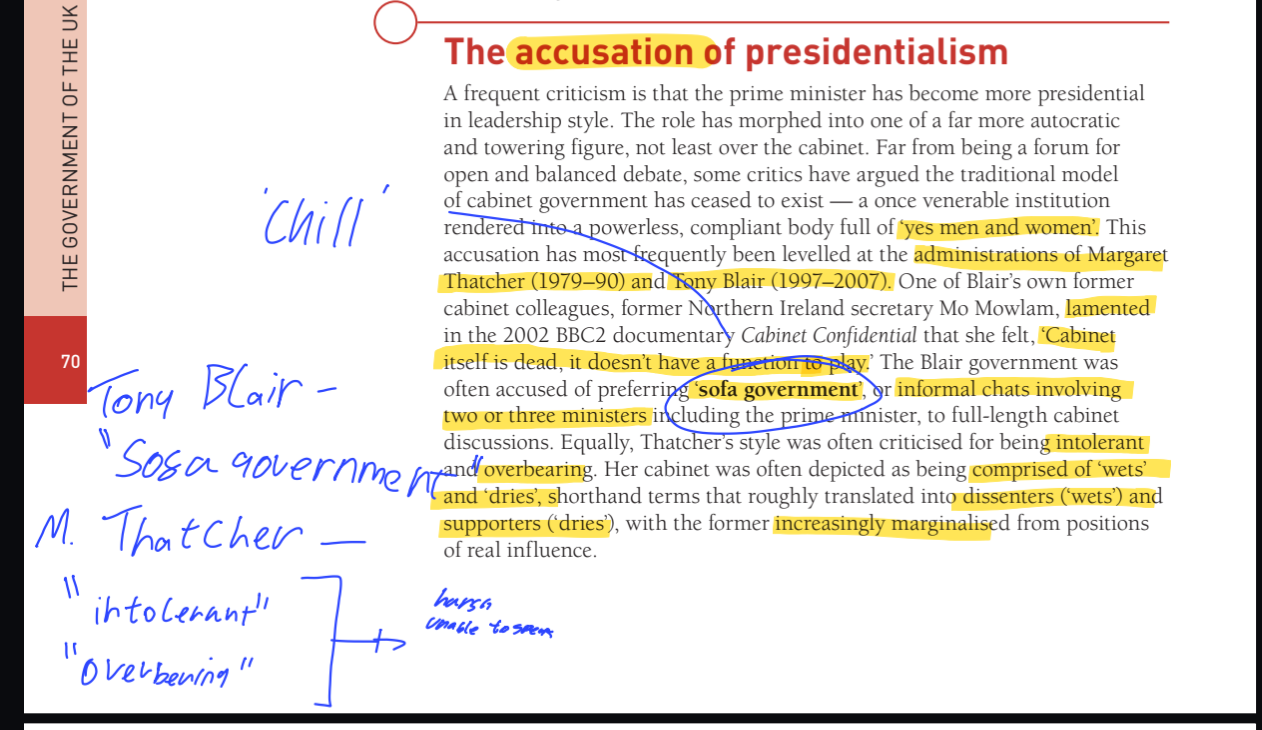
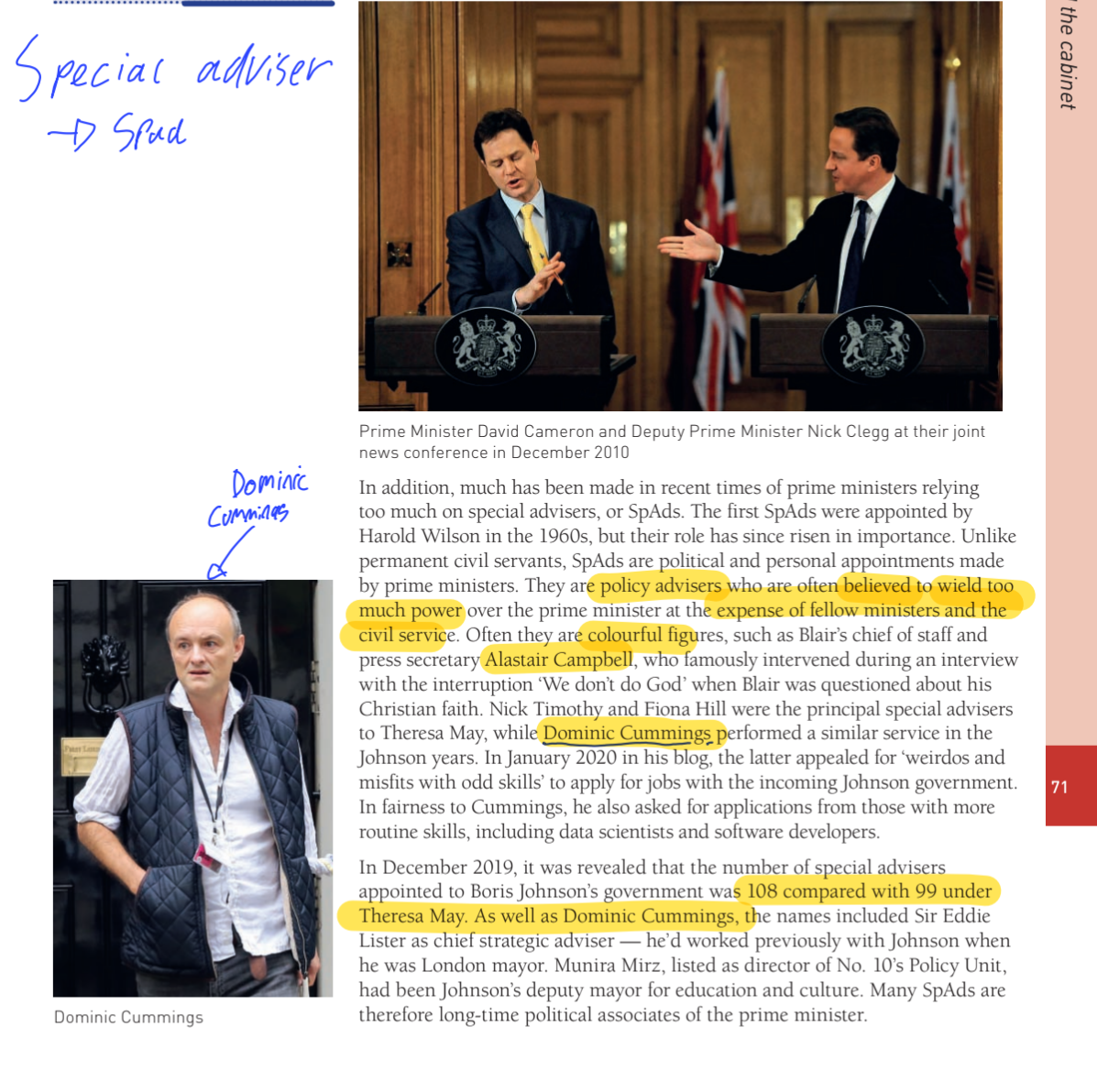
Is Not Presidential
- If a Prime Minister has a weak majority, they are weakened
- If you are not a butcher, you are not gonna do well
- (for) Margaret Thatcher was a butcher
- (against) Theresa May was not a butcher