The Start of Devolution
Once elected in 199, Tony Blair’s Labour government quickly moved to hold new referendums in Scotland and Wales to seek support for the creation of devolved institutions - the results of which were opposite.
In Northern Ireland, things were more complex with the devolved institutions being part of the wider Good Friday Agreement in 1998. This brought together the loyalist and republican committees after decades of conflict, with the devolved institutions being key. Another referendum was held to confirm support for the agreement.
Asymmetric Devolution
Order of ‘want’: Scotland, Northern Ireland, Wales
Reserved - policy which are controlled by Westminster Devolved - policy devolved to another body
Todo
Elaborate.
| Reserved | Devolved |
|---|---|
| Defence I.e., You cannot have Wales firing nukes | Council tax |
| Foreign affairs/policy I.e., You cannot have a Welsh trade deal with China | Education |
| Immigration I.e., You cannot have a hard border around Wales | Waste management |
| Energy Nuclear power, oil, and gas extraction I.e., You cannot have the Welsh pound | Healthcare |
| Trade International trade and company law I.e., You cannot have a Welsh trade deal with China | Housing |
| Broadcasting Ofcom and BBC regulation | Environment |
| Social Security Pensions and benefits | Local government |
| Justice | Culture |
| Transport |
Forms of Tax
- Council tax
- Income tax
- National Insurance
- VAT - Value Added Tax
”Why would a devolved body want to control taxes itself?”
Taxes is a political decision on how the money is spent.
- Scotland is able to set income tax bands and rates (excluding personal allowance), fully controls taxes replacing UK Stamp Duty, Land Tax, and Landfill Tax.
- Wales is able to control a portion of income tax (split) and has devolved taxes like Land and Buildings Transaction tax.
- Northern Ireland possesses over certain taxes, including corporation tax in specific circumstances, alongside local business rates.
Understanding Scotland’s Devolution
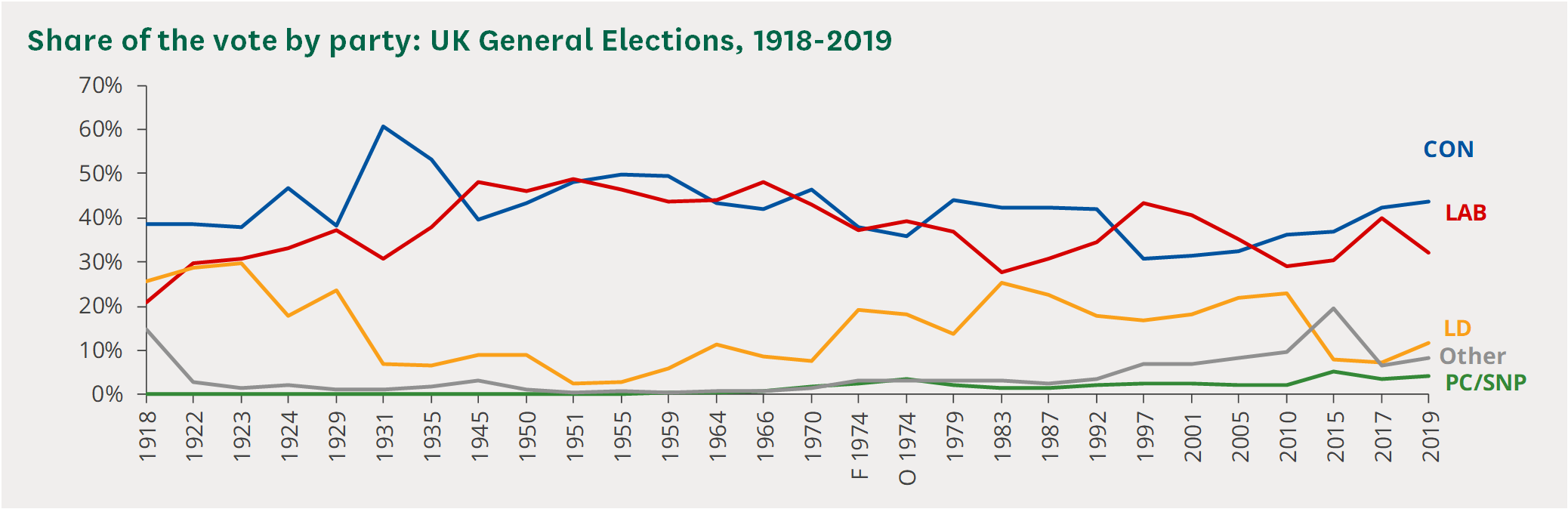
Devolution in Scotland was driven by a desire to fix a “democratic deficit” - where Scotland voted labour but was governed by Conservatives in Westminster for decades.
The 1997 referendum saw a resounding 74.3% “Yes” for Parliament and 63.5% for tax-varying powers. The Scottish electorate was asked two separate questions. This is often called the “Yes-Yes” vote.
| Question | Yes (%) | No (%) | Turnout |
|---|---|---|---|
| 1. Should there be a Scottish Parliament? | 74.3% | 25.7% | 60.4% |
| 2. Should it have tax-varying powers? | 63.5% | 36.5% | 60.4% |
Scotland Act 1998: Established the Parliament and “Reserved Powers” model (everything is devolved unless specifically listed as reserved).
Scotland Acts 2012 & 2016: Granted significant tax-raising powers and control over some welfare benefits following the 2014 Independence Referendum.
Parliament & Location: The Scottish Parliament (Holyrood), Edinburgh
Elected Members: 129 MSPs (elected via. the Additional Member System)
Current Leadership: First Minister: John Swinney (SNP) (2026)
Strength of Scottish devolution: Policy divergence (e.g., Free University Tuition, Presumed Consent for Organ Donation), shows the parliament reflecting distinct Scottish social values.
Weakness: The “West Lothian Question” - Scottish MPs at Westminster can vote on health laws, but English MPs have no say on Scottish health laws.
Understanding Wales’ Devolution (The Evolving Assembly)
Unlike Scotland, Welsh devolution was initially administrative rather than legislative, reflecting a much narrower public mandate.
The 1997 Revolution passed by a “wafer-thin” margin of just 50.3%. The victory was secured by only 6,721.
| Question | Yes (%) | No (%) | Turnout |
|---|---|---|---|
| Should there be a Welsh Assembly? | 50.3% | 49,7% | 50.1% |
Government of Wales Act 1998: Created a National Assembly with no primary law-making powers (it could only tweak Westminster laws).
Government of Wales Act 2006: Separated the executive from the legislature - gave ministers more power ins in Wales.
Wales Acts 2014 & 2017: Moved Wales to a “Reserved Powers” model, like Scotland, and granted some tax-varying powers, renaming the Senedd.
Parliament & Location: Senedd Cymru (Welsh Parliament), Cardiff Bay
Elected Members: 60 Members (moving to 96 for the 2026 election).
Success of Welsh devolution: The Welsh Language Act and the proactive use of soft power to promote Welsh culture.
Weakness: The “Senedd Gap” - for years, Wales had much less power than Scotland, creating a confusing hierarchy of devolution. Asymmetric devolution.
”Your Senedd is Changing”
From the election on 7 May 2026, you’ll see some changes to the Senedd.
Here’s what you need to know:
- 96 Members: From the election in May 2026, the Senedd will have 96 members instead of 60.
- New voting system: Everyone 16+ will now have one vote, choosing a political party of independent candidate.
- New constituencies: Wales will have 16 constituencies. Each constituency will elect six Members.
- New rules: Anyone standing for election must live in Wales.
Understanding Northern Ireland’s Devolution (Peace)
Devolution in relation to Northern Ireland is not about “efficiency” nor “national pride”, but about resolution and power-sharing between Unionists and Nationalists.
It was established 1998 Good Friday Agreement (Belfast Agreement). This as endorsed by 71% of voters. It had exceptionally high turnout in Northern Ireland, provided the cross-community legitimacy required for a power-sharing government to function.
| Region | Yes (%) | No (%) | Turnout |
|---|---|---|---|
| Northern Ireland | 71.1% | 28.9% | 81.1% |
| Republic of Ireland | 94.%$ | 5.6% | 56.3% |
Northern Ireland Act 1998: Created a unique “Consociational” (power-sharing) government.
- Mandatory coalition/power-sharing: The Executive Committee (cabinet) is made up of both Unionist and Nationalist parties, ensuring shared power rather than a winner-takes-all system.
- Joint Executive Offices: The First Minister and deputy First Minister operative as a joint office with equal powers, one from a unionist party and one from a nationalist party.
Parliament & Location: Northern Ireland Assembly, Stormont (Belfast)
Elected Members: 90 MLAs (elected via Single Transferable Vote to (ensure proportionality)
Current Leadership: (2026)
- First Minister: Michelle O’Neill (Sinn Fein)
- Deputy Fist Minister: Emma Little-Pengelly (Democratic Unionist Party)
As much as the assembly is extremely weak, having been suspended for several years repeatedly, it ended the troubles and ended the prolonged war.