Circuit Switching
- Basis for traditional telephone networks
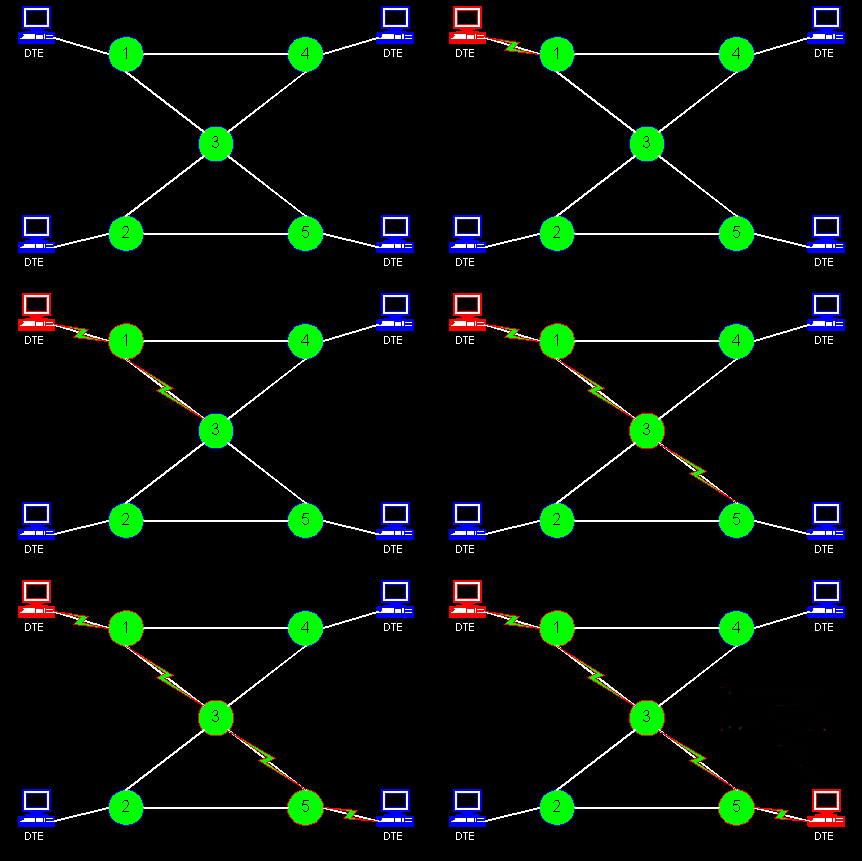
- Creates a temporary and dedicated link of fixed bandwidth between the source and destination
- Guarantees the quality of transmission through dedicated bandwidth
- Excelled for data requiring a constant end-to-end link, i.e., real-time video
- although bandwidth can be wasted
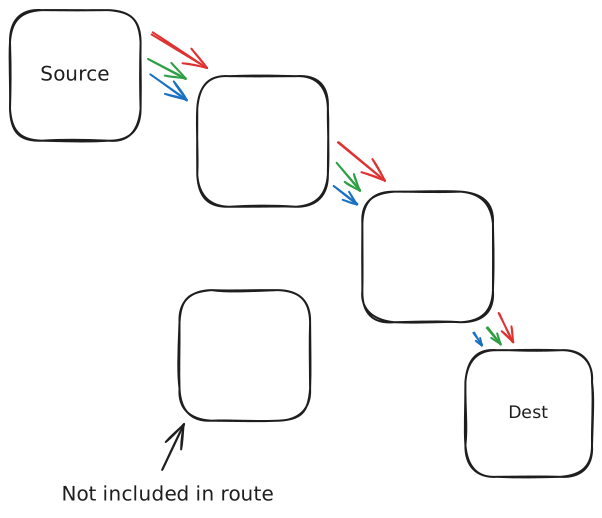
Typical circuit switching example.
Packet Switching
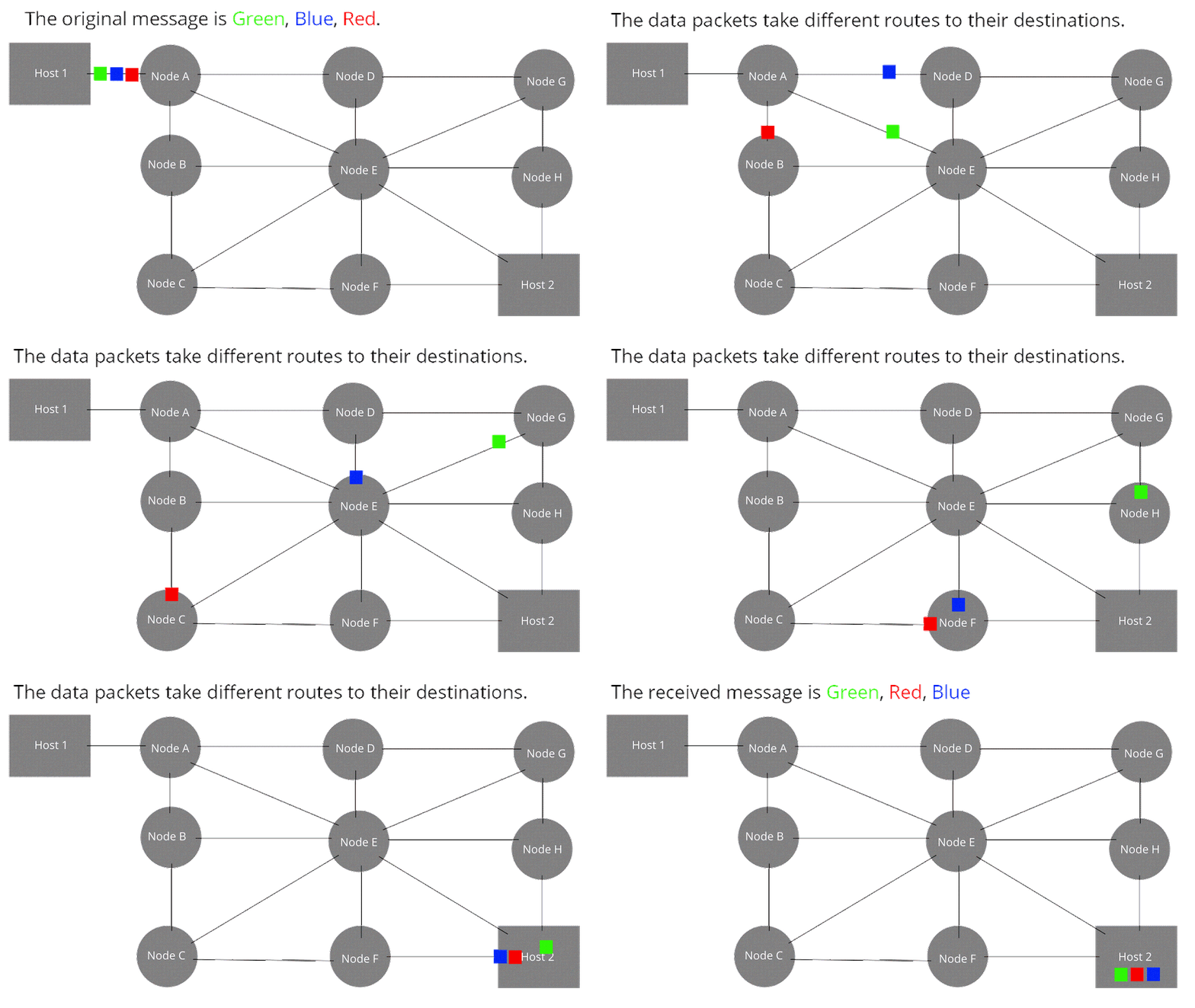
- Breaks streams of data into smaller blocks and sends them independently
- At each node, packets are sent through whatever route the node decides is the least congested
- Maximised bandwidth but does not guarantee quality of transmission
- Re-ordered at destination
- More affordable and efficient as bandwidth can be used at once and requires a less complex infrastructure
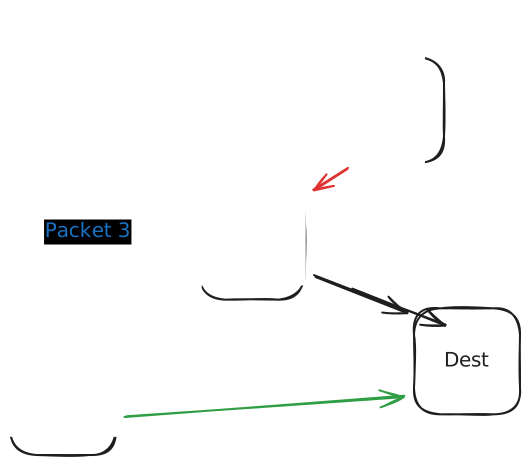
Typical packet switching example.
.excalidraw.light.svg)
Packet switching example with destroyed packet (not send by node).
Comparison
Circuit Switching
- Physical path between source and destination
- All packets use the same path
- Reserves bandwidth in advance
- Can cause a lot of bandwidth wastage
- No store and forward transmission
Primarily used in telecom communication.
Packet Switching
- No physical path
- Packets travel independently
- Does not reserve bandwidth
- No bandwidth wastage
- Supports store and forward transmission