Individualism
- Egotistical is classic - the belief that individuals are self-interested and self-reliant, seeking to maximize their own utility with minimal interference from the state
- Developmental is modern - the idea that humans will always get better and better, and that the state will need to support that
Example

Obama’s ‘Yes We Can’ campaign slogan/poster portrays the developmental idea that we can be anything we want but may need help to get there.
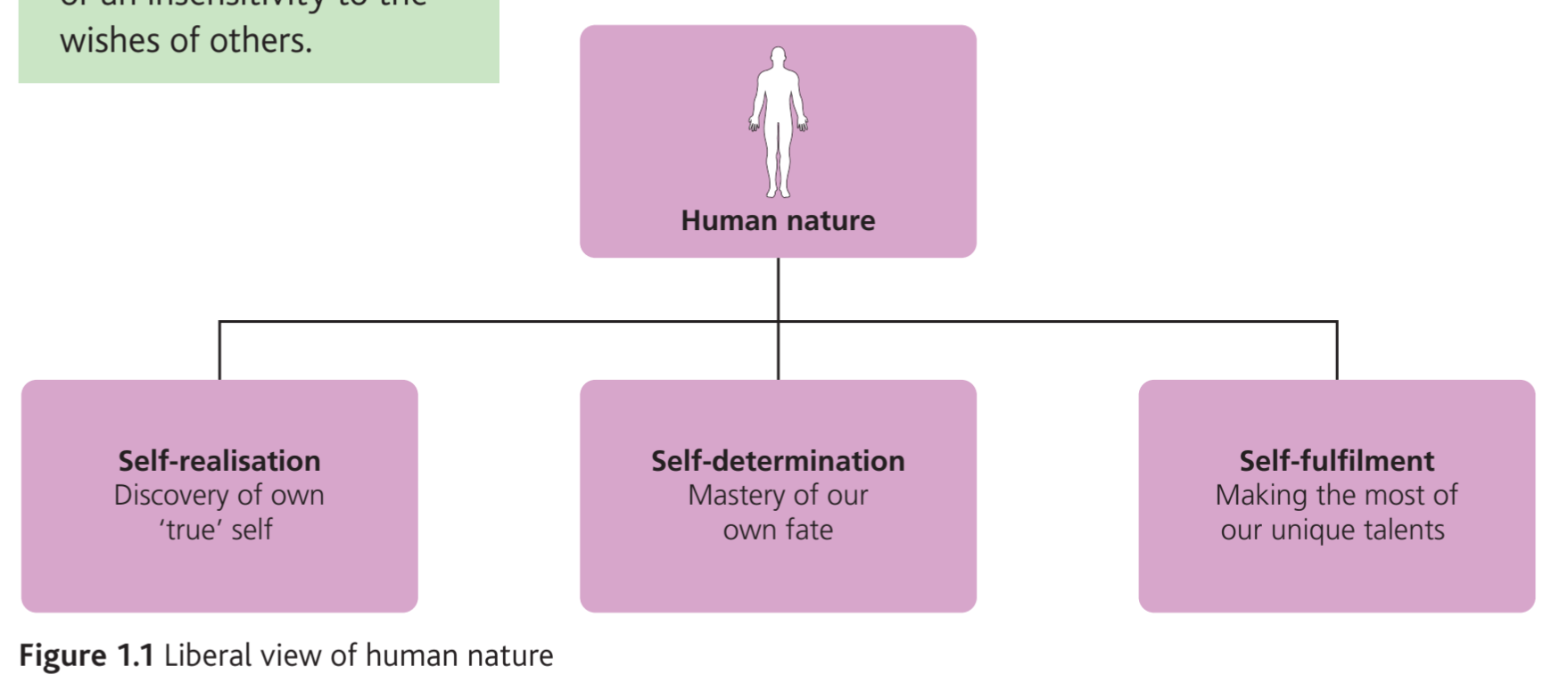
View of Human Nature
Comparison
| Classic View (John Locke) | Modern View (John Stuart Mill) |
|---|---|
| Reasonable and guided by natural laws | A “progressive being” who can always improve |
| A “finished article” with fixed rights | Not a “finished article”; focuses on potential |
| Naturally peaceful and capable | Driven by “individuality” and constant growth |
| Rights like property are born with us | Liberty is a tool for ongoing human development |
| Egotistical individualism | Developmental individualism |
| Believe in logic | Government helps out to achieve freedom (human beings want to get better but will need a helping hand) |
| Devalues society - ‘we are all individuals’, not a group that do/think the same (atomistic) | Humans are viewed as being sociable and being people who want to grow |
Notes
- Liberalism is born out of a (partial) rejection of God and the divine right of kings.
- The Enlightenment is the birthplace of liberalism - reason.
- See humans as egotistical (self-interested/self-serving), rational, and progressive.
- Ideas of self-realisation, self-determination, self-fulfilment.