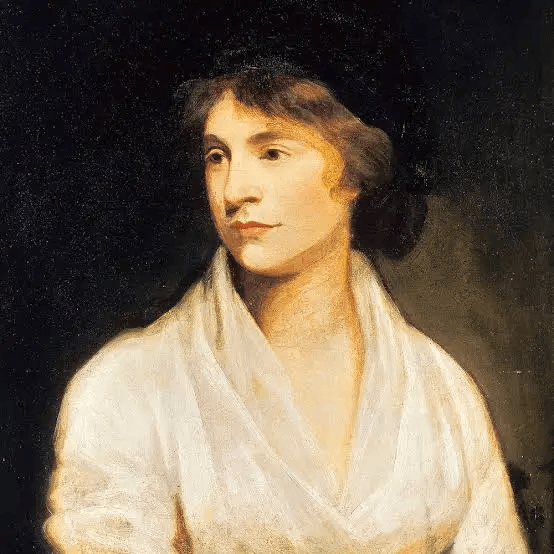
Core Ideas
- Author of A Vindication of the Rights of Woman (1792), establishing her as a preeminent proto-feminist of the Enlightenment.
- Argued that “mind has no sex” and that women have the same intellectual and rational capacities as men.
- Maintained that women could achieve the same levels of moral and political excellence as men if granted the same education and rights.
- Viewed marriage as an “intellectual companionship” or friendship between equals rather than a contract of convenience.
- Challenged the idea that modesty was a “sexual virtue” for women, redefining it as a universal human “soberness of mind”.
- Asserted that women should be “active” and “free” citizens who could even serve as elected representatives.
View on Society
Quote
“Taught from their infancy that beauty is woman’s sceptre, the mind shapes itself to the body, and, roaming round its gilt cage, only seeks to adore its prison.”
- Mary Wollstonecraft, A Vindication of the Rights of Women (1792)
Wollstonecraft argued that women’s perceived “weakness” was a result of the lack of education and legal independence, rather than nature. She advocated for women to be treated as rational individuals capable of owning property and their own minds.