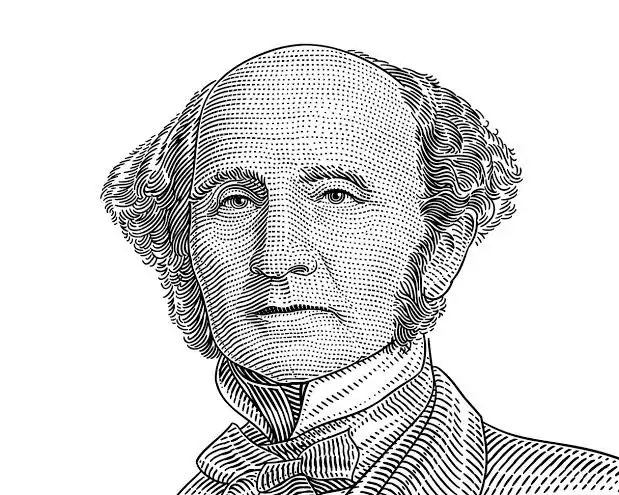
Core Ideas
- John Stuart Mill bridged classical and modern liberalism
- Promoted “negative freedom,” meaning an absence of rules or restraints
- Created the “harm principle”: people should be free unless they hurt others
- Divided actions into “self-regarding” (private) and “other-regarding” (affects others)
- Believed free debate helps good ideas replace bad ones
- Saw liberty as a way for humans to keep improving over time
- Focused on “developmental individualism,” or what people have the potential to become
- Feared democracy could lead to a “tyranny of the majority” where small groups lose their rights
Note
John Stuart Mill believed in negative freedom
View of Society
“The only freedom which deserves the name, is that of pursuing our own good in our own way, so long as we do not attempt to deprive others of theirs, or impede their efforts to obtain it.”
- John Stuart Mill, On Liberty (1859)
Mill warned against the “dull conformity” of custom, arguing that society’s tendency to impost its own ideas and practices on others is a form of social tyranny
Note
See Betty Friedan - what they say is an example of why Mill stated this.
Summary
- Negative Freedom: Freedom simply means an absence of restrictions.
- Two Types of Action:
- Self-regarding: Actions affecting only yourself (e.g., personal views, worship). Must always be tolerated.
- Other-regarding: Actions affecting others (e.g., violence). Can be banned by the state.
- Developmental Individualism: Focused on helping individuals grow into their full potential, not just leaving them as they are.
- Danger of Democracy: Warned against the “tyranny of the majority,” where an uneducated majority could vote away the rights of a minority.