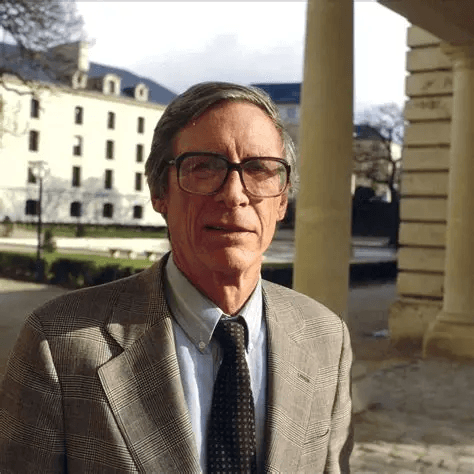
Quote
“A US political philosopher, Rawls, used a form of social contract theory to reconcile liberal individualism with the principles of redistribution and social justice. In his major work, A Theory of Justice (1970, he developed the notion of ‘justice of fairness’, based on the belief that behind a ‘veil of ignorance’ most people would accept that the liberty of each should be compatible with a like liberty for all, and that social inequality is only justified if it works to benefit of the poorest in society.”
- Textbook
He argues that if you were to create a liberal society, the end goal is where everyone is richer, happier, and free, where people are more equal.
Note
Writing in the post-war era.
Core Ideas
- Rawls’s work is less a ‘comprehensive moral doctrine’ and more a strictly ‘political conception of justice’.
- comprehensive moral doctrine: a set of beliefs, covers all major moral aspects of life
- political conception of justice: framework for structuring a society’s basic political and social institutions
- Rawls argued that modern democratic societies are defined by a permanent pluralism of incompatible yet reasonable beliefs.
- Rawls rejected the idea that a political system can be built on a single shared worldview, as enforcing one would require the oppressive use of state power.
- Rawls redefined ‘primary goods’ from general requirements for human flourishing into the specific tools citizens need to participate in a liberal regime.
- Rawls eliminated perfectionism* because forcing moral standards onto a diverse public threatens peace and stability.
- Rawls sought an ‘overlapping consensus,’ allowing citizens with deeply opposing personal values to still unite around shared political rules.
*the promotion of moral excellence by the government