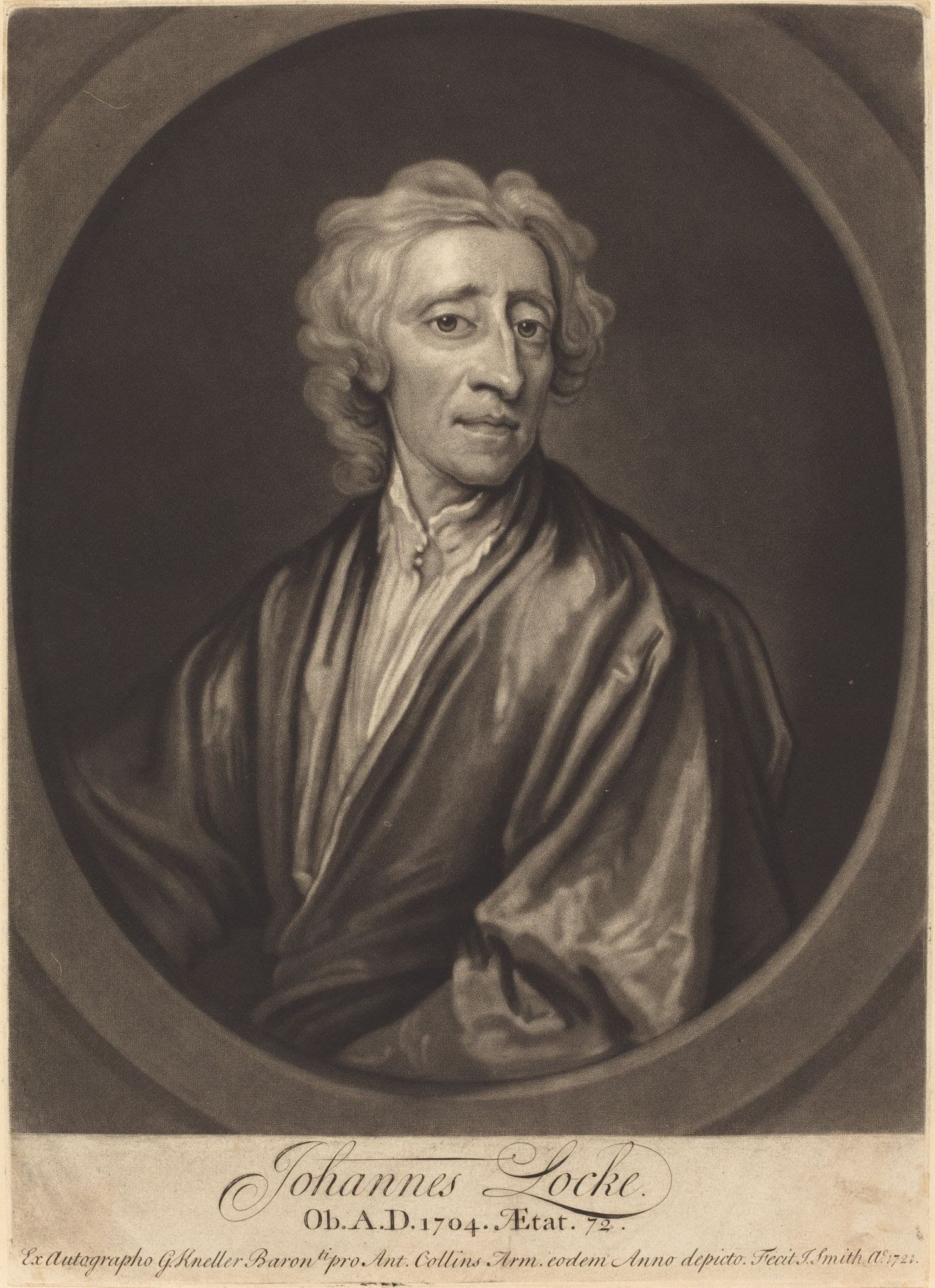
Social Contract Theory - the state is created by the people to serve human interests. It only exists by the consent of the governed.
Limited Government - power must be split (legislative and executive branches) and restricted to protecting rights.
Rejection of ‘absolutism’ (the “divine right of kings” and religious duty to obey a monarch)
Human Nature/State of Nature
Rationality, the idea people are naturally reasonable and free to order their actions and possessions.
State of Nature, the idea that the state of nature is not a “war of all against all,” (unlike the Thomas Hobbes belief of human nature) but a tolerable place where natural laws (aka. reason) already exist.
Without a state, there is no neutral judge to resolve disputes. A civil society is the solution for the inconveniences of the state of nature.
Natural Rights
Locke argued that humans possess inalienable rights that exist prior to any government:
Life: The right to survive and be safe from harm
Liberty: The freedom to act without being controlled by a master or the state
Property: The right to own what you have worked for.
Quotes
“No one ought to harm another in his life, health, liberty, or possessions.”
“Where there is no law, there is no freedom.”
- John Locke father of classical liberalism - Two Treatises of Government 1690 cornerstone text - Rejected divine right of kings and religious duty to obey - State created by people to serve human interests - Consent of the governed is required for a state to be true - State of nature was tolerable because people are rational - Natural laws and rights like property exist without a state - Government exists to resolve disputes better than the state of nature - Social contract means citizens accept laws in exchange for better conditions - Limited government must only represent the interests of the governed - Powers must be split between branches like legislative and executive # Human Nature - Believed that all men are free "to order their actions, and dispose of their possessions as persons, as they think fit, within the bounds of the law and nature." - Believed that "the state of Nature has a law of Nature to govern it", and that law is reason. - Believed that reason teaches that "no one brought to harm another in his life, liberty, and or property"; and that transgressions of this may be punished - Believed that the state of nature and civil society to be opposites of each other, and the need for civil society comes in part from the perpetual existence of the state of nature > [!TODO] > Make notes on - see Classroom # Individualism As well as challenging the traditional Christian view of human imperfection, early liberals also challenged the importance of social groups in society. For hundreds of years, a person's quality of life, and life chances, were dictated by their position in society, such as through their family, the area they lived in, their social class. Very little changed from one generation to the next as a result of this. As feudal society broke down, individuals were finally able to set out their own plans and peruse their own goals, which in turn wee based on rational decision making. Liberal theorists and philosophers … %%