Warning
This document was partially AI generated.
Context
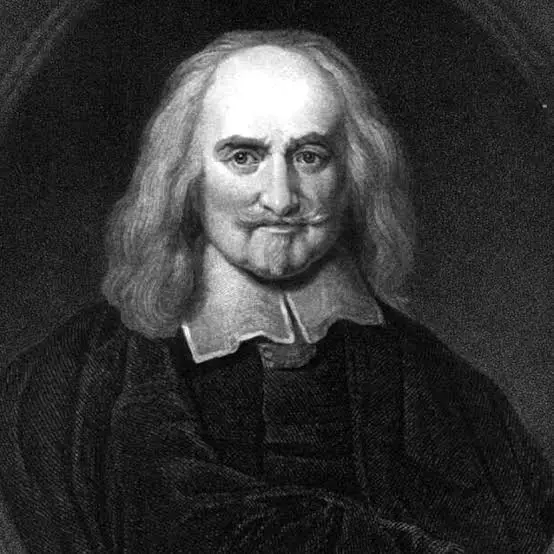
Thomas Hobbes (1588-1679) was a deeply sceptical philosopher whose work was heavily influenced by the chaos of the English Civil War. His most famous work, Leviathan (1651), argues that formal authority is essential to prevent social collapse.
Human Nature
“Hereby it is manifest that during the time men live without a common power to keep them in awe, they are in condition which is called war, and such a war is of every man against every man… In such condition there is no place for industry, because the fruit thereof is uncertain… and which is worst of all, continual fear, and danger of violent death; and the life of a man, solitary, poor, nasty, brutish, and short. ”
- Thomas Hobbes
Hobbes viewed human nature as ruthlessly selfish, calculating, and competitive. He argued that:
- Humans are driven by a restless desire for power and the acquisition of goods.
- There is an immovable distrust of others and a constant fear of violent death.
- Without the restraints of formal authority, relations between humans would be marked by “envy, hatred and war.”
- Prior to the emergence of a state, there are no “natural rights” or voluntary cooperation.
The State and the Social Contract
Hobbes believed that because humans are rational, they would eventually realize that the “state of nature” is inimical to their own self-interest.
- The Contract: Individuals agree to a social contract, rendering their rights to a “Sovereign” (the state).
- The Sovereign: The state has the right to make laws and enforce an unquestioned code of right and wrong, providing the order and security absent in the state of nature.
- Autocracy: For the state to be effective, it must be autocratic. Hobbes argued that if power were dispersed, the conflicts of the state of nature would soon return.
- Order precedes Liberty: For Hobbes, the feasibility of individual rights is entirely dependent upon law and order, which only the state can provide.
Hobbes and Conservatism
While often seen as a conservative forefather due to his focus on order and authority, Hobbes is also linked to Enlightenment thinking:
- Rationality: He believed humans were capable of cold, rational calculations to form a state.
- Government by Consent: The idea of a “contract” between the governed and the government is a liberal principle later used by John Locke.